
𝙏𝘼𝙆 𝙁𝙊𝙍 𝘿𝙀𝙉𝙉𝙀 𝙂𝘼𝙉𝙂
🏁𝐍𝐔 𝐒𝐓𝐀𝐑𝐓𝐄𝐑 𝐃𝐄𝐓 𝐒𝐓𝐎𝐑𝐄 𝐔𝐃𝐊Ø𝐑𝐒𝐄𝐋𝐒𝐒𝐇𝐎𝐖! 🚗💨
Klokken er 16.00, portene åbnes – og køretøjerne slippes fri! 😎
Nu begynder et af weekendens helt særlige øjeblikke:
🚗 𝐃𝐄𝐓 𝐒𝐓𝐎𝐑𝐄 𝐔𝐃𝐊Ø𝐑𝐒𝐄𝐋𝐒𝐒𝐇𝐎𝐖 🚗
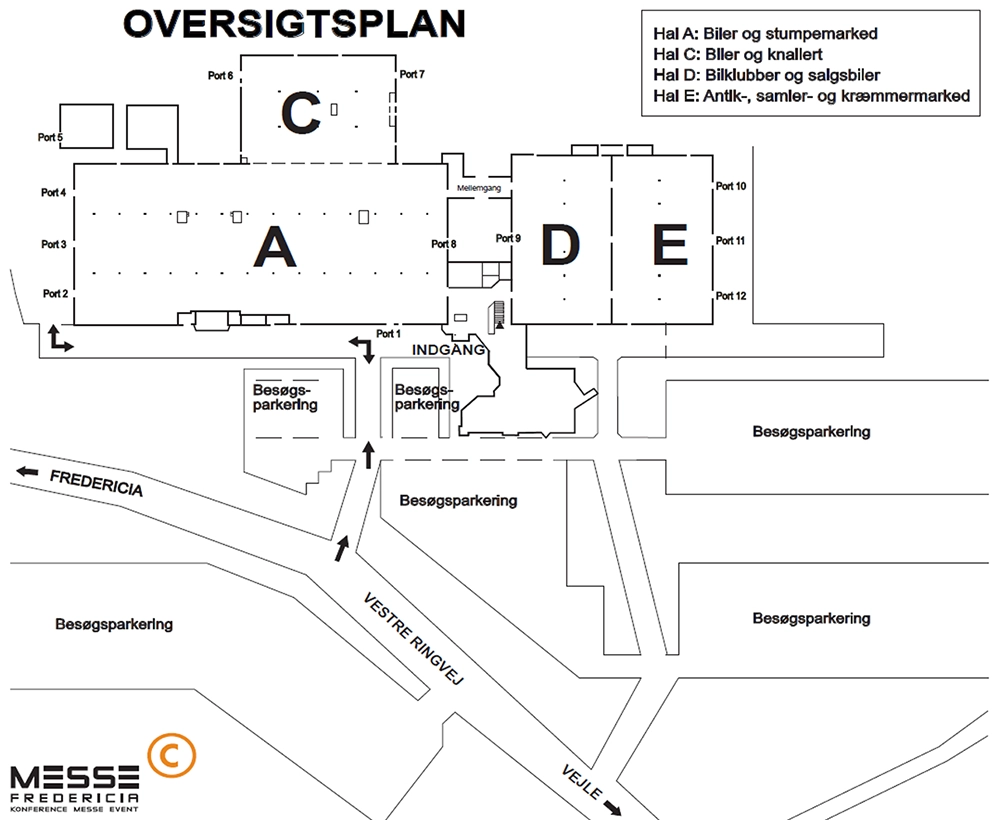
Én efter én triller specialbilerne ud fra MESSE C og sætter kursen hjemad.
Nogle med den samme ejer som da de kom…
andre måske med en helt ny glad ejer bag rattet. 😉🔑
For mange af de klassiske biler er turen herfra også en af årets sidste, inden de bliver kørt hjem i garagen, puttet godt væk for vinteren og får lov til at vente på lysere tider. ❄️🔧
Det er altid lidt vemodigt at se hallerne blive tømt efter en hel weekend med biler, MC, knallerter, stumper, handler, historier og masser af mennesker med samme interesse.
❤️ En kæmpe TAK til alle jer, der har besøgt os.
🤝 Tak til alle udstillere, sælgere, klubber og hjælpere.
🚗 Og tak til alle jer, der tog jeres fantastiske køretøjer med til Fredericia og var med til at skabe messen.
Uden jer – ingen Bilmesse & Brugtmarked.
Men heldigvis er det ikke farvel…
Det er bare:
👋 PÅ GENSYN!
For den 3.–4. april 2027 slår vi portene op igen til FORÅRSMESSEN i Fredericia. 🌱☀️🚗
Så nu sender vi de gamle køretøjer hjem i garagerne for vinteren…
…og begynder allerede at glæde os til lyden af motorer i MESSE C igen. ❤️🔥
NÆSTE 𝗕𝗜𝗟𝗠𝗘𝗦𝗦𝗘 & 𝗕𝗥𝗨𝗚𝗧𝗠𝗔𝗥𝗞𝗘𝗗
📅 3.–4. april 2027
📍 MESSE C, Fredericia
🏁 Stedet hvor køber og sælger mødes.
Tak for denne gang – og rigtig god tur hjem! ❤️

Peugeot 205 GTI
Come see it October 17–18 in Fredericia!
Small car. Big attitude. Zero need for a giant turbo! 🔥🇫🇷 This red Peugeot 205 has the ingredients that made the GTI a hot-hatch icon: black wheelarch extensions, red pinstripes, deep front spoiler and those beautiful pepperpot-style alloys. Pure 1980s driving joy!
🔎 Why it`s special
The regular 205 arrived in 1983; the GTI followed in 1984. Peugeot`s lightweight three-door hatchback took on the Golf GTI with sharp steering, lively engines and a chassis that rewarded an involved driver. No driving modes or giant touchscreen needed.
🧠 For the nerds
The GTI family used naturally aspirated, water-cooled XU four-cylinders, mounted transversely with front-wheel drive and a five-speed manual gearbox. The 1.6 began at 105 PS, later rising to 115 PS; the 1.9 offered around 130 PS before emissions-related changes in some markets. Up front: MacPherson struts. At the rear: trailing arms with transverse torsion bars. The 1.6 generally had rear drums; the 1.9 gained rear discs. This car wears 1.6-style wheels, but its engine, year and factory specification aren`t confirmed. 🔧
🔥 Bonus info
The wild 205 Turbo 16 won the World Rally Championship manufacturers` titles in BOTH 1985 and 1986, then conquered Paris–Dakar in 1987 and 1988! 🏁 But don`t confuse it with the road GTI: the T16 had a mid-mounted turbo engine and four-wheel drive.
Which hot hatch gets your vote: 205 GTI, Golf GTI or Renault 5 GT Turbo? ❤️
Klein, leicht, legendär! Der Peugeot 205 GTI kam 1984 auf den Markt. Die 1,6- und 1,9-Liter-Versionen kombinierten Frontantrieb mit agiler Fahrwerksabstimmung. Der berühmte 205 Turbo 16 war dagegen ein eigenständiger Gruppe-B-Rallyewagen. Baujahr und Motor des roten Exemplars sind nicht bestätigt.
#Peugeot #Peugeot205 #Peugeot205GTI #205GTI #HotHatch #FrenchCars #FrenchClassic #ClassicPeugeot #Youngtimer #1980sCars #GTILegend #FrontWheelDrive #XUEngine #ClassicCars #ClassicCarCulture #MotorsportHistory #GroupB #205T16 #RetroCars #Petrolhead #Bilmesse #Brugtmarked #Fredericia
Honda CRX (First Generation)
Come see it October 17–18 in Fredericia!
Who needs 300 horsepower when the whole car weighs about as much as a modern car`s collection of extras? 😎🇯🇵 This red first-generation Honda CRX has everything we love about 1980s Japanese performance: a wedge-shaped nose, compact hatchback tail, black lower trim and pure lightweight attitude.
🔎 Why it`s special
Launched in Japan in 1983 as the Ballade Sports CR-X, it turned Civic-based engineering into a sharp, affordable front-wheel-drive coupé. The short wheelbase and low seating position made every bend an event. Flush headlamps like these appeared with the mid-1980s update, but the exact year of this car is unconfirmed.
🧠 For the nerds
Honda used unusual composite panels on the first CR-X, including the front fenders and nose: its H.P. ALLOY material combined plastics to save weight and resist corrosion. Underneath were front torsion-bar struts and a compact rear trailing-link beam. Engine choice varied by market: 1.3 and 1.5-litre units came first; the later 1.6 DOHC 16-valve Si made the small coupé a real hot-hatch rival. This example`s engine and trim aren`t verified. 🔧
🔥 Bonus info
Honda`s original 1983 brochure even described an optional roof ventilation system using airflow pressure while driving! And in 1984 its Japanese Si received a 1.6 DOHC engine rated at 135 PS. That`s BEFORE the VTEC era – VTEC came to the later CR-X generation. 🏁
Would you take this little Honda over a Golf GTI or Peugeot 205 GTI? ❤️
Klein, leicht und voller Fahrspaß! Der erste Honda CR-X erschien 1983 in Japan. Kunststoff-Kotflügel halfen beim Gewichtssparen, dazu kamen Frontantrieb und ein sportlich abgestimmtes Fahrwerk. Je nach Markt gab es verschiedene Vierzylinder bis zum 1,6-Liter-DOHC. Baujahr und Motor dieses roten Exemplars sind nicht bestätigt.
#Honda #HondaCRX #CRX #FirstGenCRX #ClassicHonda #JapaneseClassic #JDMClassic #JDM #1980sCars #RetroHonda #LightweightCars #HotHatch #FrontWheelDrive #DOHC #HondaHistory #Youngtimer #ClassicCars #JapaneseCars #Petrolhead #CarCulture #Bilmesse #Brugtmarked #Fredericia
Alfa Romeo 33 (Type 907)
Come see it October 17–18 in Fredericia!
A sensible five-door family car? Not when Alfa Romeo gives it a boxer engine and an Italian temper! ❤️🇮🇹 This red 33 brings back the era of sharp lines, distinctive Alfa wheels and cars with real personality.
🔎 Why it`s special
Launched in 1983 to succeed the Alfasud, the 33 combined familiar engineering with a new body designed by Ermanno Cressoni and Ernesto Cattoni. Built at Pomigliano d’Arco, its clever shape looked almost like a saloon, yet the entire rear window lifted with the tailgate. The major 1990 facelift (Type 907) brought a sharper nose, revised interior and rear lights inspired by the flagship Alfa 164.
🧠 For the nerds
Most 33s used front-wheel drive and a low-mounted, water-cooled flat-four boxer with belt-driven overhead camshafts. Depending on year and market, petrol engines included 1.3, 1.5 and 1.7-litre versions. The ultimate 1.7 16V gained four camshafts and serious hot-hatch attitude! Some versions even offered four-wheel drive, later known as Permanent 4/Q4. Unlike the Alfasud, the 33 moved its front brake discs out to the wheels and generally used rear drums. Its low boxer layout helped keep the centre of gravity down. This car`s exact year, engine and trim are unconfirmed. 🔧
🔥 Bonus info
The 33 wasn`t only a shopping-run hero: a 33 4x4 won Group N at the 1986 Monte Carlo Rally, while a Giardinetta 4x4 even appeared in the Paris-Dakar! 🏁
Would you choose this boxer-powered Alfa over a Golf or Escort? 😎
Italienischer Charakter im Familienformat! Der Alfa 33 beerbte 1983 den Alfasud und erhielt 1990 als Typ 907 eine neue Front und ein überarbeitetes Heck. Berühmt sind die flachen, wassergekühlten Boxermotoren; die stärkste 1,7-Liter-Version hatte 16 Ventile. Baujahr und Motor dieses roten Exemplars sind nicht bestätigt.
#AlfaRomeo #Alfa33 #AlfaRomeo33 #AlfaBoxer #BoxerEngine #Type907 #Alfasud #ItalianCars #ItalianClassic #ClassicAlfa #Youngtimer #ClassicHatchback #FrontWheelDrive #CarHistory #AutomotiveHistory #ClassicCars #Oldtimer #CarCulture #Petrolhead #Bilmesse #Brugtmarked #Fredericia
Volkswagen Beetle 1303 Cabriolet
Come see it October 17–18 in Fredericia!
The roof comes down, the smiles go up – and the engine is still in the back! ❤️🇩🇪 This gorgeous red Beetle with chrome bumpers, wing-mounted indicators, classic running boards and a folded black hood is open-air motoring at its happiest.
🔎 Why it`s special
Built by Karmann in Osnabrück, the Beetle Cabriolet was much more than a saloon with its roof chopped off. Its sills and body structure needed extra reinforcement to stay rigid without a fixed steel roof. And with the hood folded down, those unmistakable Beetle curves are completely on show. The 1303 generation, introduced in the early 1970s, brought a distinctive curved windscreen and padded dashboard – partly in response to tougher safety requirements.
🧠 For the nerds
The 1303 used MacPherson struts up front rather than the older Beetle`s torsion-bar front axle. In factory 1303 LS Cabriolet form, power came from a rear-mounted, air-cooled 1.6-litre flat-four producing 50 metric hp, driving the rear wheels through a four-speed manual gearbox. No radiator, no coolant – just a fan, cooling fins and unmistakable boxer music! The boot? That`s at the front, of course. The exact engine and year of this example aren`t confirmed. 🔧
🔥 Bonus info
On 10 January 1980, the LAST classic Beetle Cabriolet left production. Across 31 years, 331,847 open Beetles were built – a record later surpassed by the Golf Cabriolet. And both were built by Karmann! 😮
Are you a roof-down-even-in-October kind of driver? 😎
Rot, offen und luftgekühlt! Der VW 1303 Käfer Cabriolet trägt die gewölbte Frontscheibe und eine verstärkte Karosserie von Karmann. Die 1303-LS-Ausführung bot einen 1,6-Liter-Boxer mit 50 PS und Federbeine vorn. Das genaue Baujahr und der Motor dieses Wagens sind nicht bestätigt.
#Volkswagen #VWBeetle #BeetleCabriolet #VW1303 #Kaefer #KaeferCabrio #Karmann #AircooledVW #FlatFour #BoxerEngine #RearEngine #ClassicVW #VintageVolkswagen #ClassicConvertible #OpenTopMotoring #ClassicCars #Oldtimer #VolkswagenClassic #CarHistory #VWClassic #CarCulture #Bilmesse #Brugtmarked #Fredericia
Austin A40 Farina Mk II
Come see it October 17–18 in Fredericia!
British engineering, Italian tailoring – and a little racing history hiding behind that innocent smile! 🇬🇧🇮🇹❤️ This bright-red Austin with a contrasting black roof, chrome grille and period mirrors is proof that a small family car can have enormous character.
🔎 Why it`s special
Launched in 1958, the A40 Farina was styled by Italy`s Pinin Farina for Britain`s Austin. Its crisp, two-box silhouette was a radical departure from the rounded A35. The Mk II arrived in 1961 with a longer wheelbase, a wider-looking grille and extra rear legroom.
🧠 For the nerds
Underneath sat familiar BMC engineering: a front-mounted, water-cooled A-series OHV four-cylinder, rear-wheel drive, a four-speed manual gearbox and a live rear axle on leaf springs. Early cars used 948cc; from late 1962, the Mk II switched to 1,098cc. This car`s exact year, engine and rear-opening arrangement haven`t been confirmed. 🔧
🔥 Bonus info
The 1959 Countryman had a split rear tailgate, making it an early ancestor of today`s hatchbacks. The Italian-built Innocenti Combinata went further with a one-piece rear door! And this little Austin wasn`t just a shopping car: Doc Shepherd won the 1960 British Saloon Car Championship driving an A40! 🏁 Even Pat Moss and Ann Wisdom took an A40 to 10th overall in the 1959 Monte Carlo Rally.
Would you take this stylish little Brit home? 😎
Britische Technik trifft italienisches Design! Der Austin A40 Farina wurde ab 1958 gebaut; der Mk II folgte 1961 mit längerem Radstand. Typisch waren A-Series-Vierzylinder, Hinterradantrieb und vier Gänge. Der Countryman mit geteilter Heckklappe war ein früher Hatchback-Vorläufer. Baujahr und Motor dieses roten Exemplars sind nicht bestätigt.
#Austin #AustinA40 #A40Farina #AustinA40Farina #Pininfarina #BMC #BritishClassic #BritishCars #ClassicAustin #ClassicCars #ClassicCarShow #VintageCars #Oldtimer #RetroCars #AseriesEngine #RearWheelDrive #ClassicMotoring #CarHistory #HatchbackHistory #TouringCarRacing #1960sCars #Bilmesse #Brugtmarked #Fredericia
Mercedes-Benz 230 (W143) & 290 (W18)
Come see them October 17–18 in Fredericia!
Two brothers. Twelve cylinders between them. And enough pre-war elegance to stop traffic! 🎩✨ On the left, the dark-blue 230; on the right, the larger 290 in two-tone blue and black. Long bonnets, separate fenders, side-mounted spare wheels and two magnificent open-top Mercedes-Benz classics.
🔎 Why they`re special
The Mercedes-Benz 290 (W18) was built from 1933–1937 as a refined touring car, while the later 230 (W143) ran from 1937–1941. Different model families, united by the unmistakable Mercedes star and a time when open motoring meant serious style! Neither needed a huge V8 to make an entrance. Both have their own chapter in the story of Mercedes-Benz.
🧠 For the nerds
Both families used front-mounted, rear-wheel-drive, side-valve straight-six petrol engines – not V8s! The 230 had 2,229cc and 55 PS; the 290 had 2,867cc, originally 60 PS and later up to 68 PS. The 290 also featured hydraulic brakes and independent suspension. Body styles and wheelbases varied, so the exact mechanical specifications of these two individual cars aren`t verified. 🔧
🔥 Bonus info
Some 230 (W143) engines used an oil-filter cleaning mechanism linked to the clutch pedal: pressing the clutch helped operate the filter`s scraper! Meanwhile, certain 290 versions featured an overdrive top ratio. Clever engineering from an age before electronic everything.
Which keys would you grab – little brother 230 or big brother 290? ❤️
Zwei Brüder, zwölf Zylinder! 🇩🇪 Links der Mercedes-Benz 230 (W143), rechts der größere 290 (W18). Beide Baureihen nutzten seitengesteuerte Reihensechszylinder: 2,23 Liter und 55 PS beim 230, 2,87 Liter und je nach Baujahr 60 bis 68 PS beim 290. Zwei offene Klassiker voller Vorkriegs-Eleganz!
#MercedesBenz #MercedesClassic #Mercedes230 #Mercedes290 #W143 #W18 #PreWarMercedes #PreWarCars #ClassicMercedes #VintageMercedes #StraightSix #ClassicCabriolet #OpenTourer #GermanClassic #AutomotiveHistory #VintageCars #ClassicCars #Oldtimer #VeteranCars #CarCulture #Bilmesse #Brugtmarked #Fredericia
Ford Mustang Fastback
Come see it October 17–18 in Fredericia!
White paint, dark racing stripes, a bonnet scoop and a silhouette that helped define the American pony car! 🇺🇸🏁 This Mustang has serious Shelby-inspired attitude – but stripes alone don`t make a genuine GT350.
🔎 Why it`s special
When the Mustang launched in April 1964, it was offered as a hardtop and convertible. The dramatic 2+2 Fastback joined for the 1965 model year, with a roofline sweeping towards the tail. The combination of compact proportions, personal style and accessible performance was a sensation: Ford sold over 418,000 Mustangs in its first year! A fold-down rear seat was an available option, too.
🧠 For the nerds
The early Mustang shared engineering roots with the Ford Falcon: a unitary body, independent front suspension, a live rear axle on leaf springs and rear-wheel drive. Buyers could choose a six-cylinder engine or different V8s, including versions of the famous 289 cubic-inch (4.7L) small-block. Gearbox and horsepower depended on specification. This car`s exact year, engine and factory equipment haven`t been confirmed. 🔧
🔥 Bonus info
In 1965, Carroll Shelby turned the Fastback into the GT350, using a tuned 289 V8 rated at 306 gross hp. White paint with blue stripes became legendary. This car clearly echoes that look, but its stripes and scoop aren`t proof of Shelby origin!
Drive it or just admire it from the pavement? 😎❤️
Amerikanische Pony-Car-Legende! Das Mustang Fastback kam zum Modelljahr 1965. Typisch waren Heckantrieb, Starrachse mit Blattfedern und wahlweise Sechszylinder oder V8. Die Rennstreifen erinnern an den Shelby GT350 – beweisen aber keine Shelby-Herkunft. Baujahr und Motor dieses Autos sind nicht bestätigt.
#Ford #Mustang #FordMustang #MustangFastback #ClassicMustang #FirstGenMustang #PonyCar #ShelbyInspired #GT350 #CarrollShelby #289V8 #AmericanClassic #AmericanCars #ClassicFord #Fastback #V8Culture #MuscleCarCulture #VintageCars #ClassicCars #Oldtimer #CarHistory #CarCulture #ClassicCarShow #Bilmesse #Brugtmarked #Fredericia
Var du en af de mange heldige der fik købt en bil til Bilmesse & Brugtmarked i år? 😍
Og fik du ringet med klokken så du samtidig fik en flaske mousserende hvidvin med hjem til at fejre din nye drømmebil med?!🔔
Vis os gerne et billede af dit nyerhvervede drømmekøretøj, du har købt i år, hvad end det er på messen, eller et andet sted, så elsker vi at se hvad I går og hygger jer med derude 🚗☁
Fik du ikke købt drømmekøretøjet, ringet med klokken og fik en flaske vin, så husk at muligheden er der igen til næste år den 3. – 4. april og 23. – 24. oktober til Bilmesse & Brugtmarked 2027! ... See MoreSee Less
Dette indhold er ikke tilgængeligt lige nu.
Når dette sker, skyldes det normalt, at ejeren kun har delt det med en lille gruppe mennesker, har ændret, hvem der kan se det, eller har slettet det.... See MoreSee Less
Dette indhold er ikke tilgængeligt lige nu.
Når dette sker, skyldes det normalt, at ejeren kun har delt det med en lille gruppe mennesker, har ændret, hvem der kan se det, eller har slettet det.Var du en af de mange heldige der fik købt en bil til Bilmesse & Brugtmarked i år?
Og fik du ringet med klokken så du samtidig fik en flaske mousserende hvidvin med hjem til at fejre din nye drømmebil med?!
Vis os gerne et billede af dit nyerhvervede drømmekøretøj, du har købt i år, hvad end det er på messen, eller andet sted, så elsker vi at se hvad I går og hygger jer med derude 🚗☁
Fik du ikke købt drømmekøretøjet, ringet med klokken og fik en flaske vin, så husk at muligheden er der igen til næste år til Bilmesse & Brugtmarked 2027 den 3. – 4. april og
23. – 24. oktober 2027! ... See MoreSee Less
... See MoreSee Less
Dette indhold er ikke tilgængeligt lige nu.
Når dette sker, skyldes det normalt, at ejeren kun har delt det med en lille gruppe mennesker, har ændret, hvem der kan se det, eller har slettet det.... See MoreSee Less
Dette indhold er ikke tilgængeligt lige nu.
Når dette sker, skyldes det normalt, at ejeren kun har delt det med en lille gruppe mennesker, har ændret, hvem der kan se det, eller har slettet det.... See MoreSee Less
Dette indhold er ikke tilgængeligt lige nu.
Når dette sker, skyldes det normalt, at ejeren kun har delt det med en lille gruppe mennesker, har ændret, hvem der kan se det, eller har slettet det.